
Your Parking Space Could Be One of Your Easiest Sources of Extra Income
The search for extra income has become a permanent part of modern life. People sell things they no longer need, freelance after work, rent out rooms, deliver food and look for ways to make better use of the assets they already own. The appeal is understandable. When the cost of living rises, even a relatively small additional source of income can make a difference.

But there is one asset that most people rarely think about when considering ways to make money: their parking space.
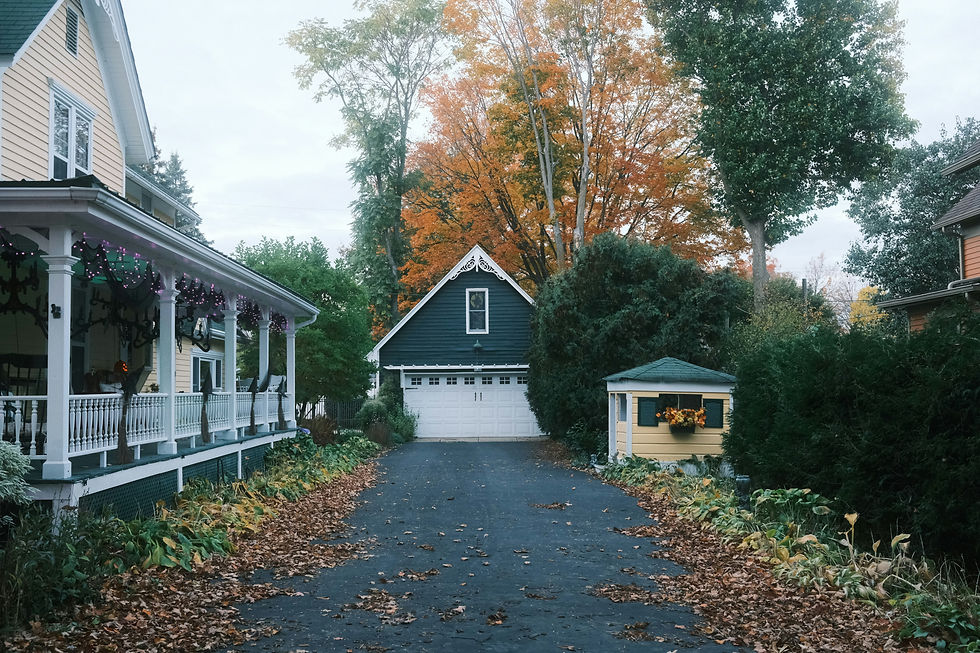
A driveway, parking pad or unused space on a private property can have value beyond its obvious purpose. If it sits empty for hours or days at a time, there may be an opportunity to make that space available to someone who needs it. You do not have to build anything new. You may already own the asset.
The Difference Between Making Money and Selling Your Time
Most side hustles require something from you.
You drive somewhere. You deliver something. You take on another client. You make a product. You work another shift. The additional income comes at least partly from exchanging more of your time for money.
Parking is different.
If you already have a parking space that you are not using, making it available to someone else does not necessarily require you to spend more of your working day doing something. The asset already exists. It is simply being underused.
That does not make parking a guaranteed or effortless source of income. Demand depends on location, availability and other factors, and property owners need to consider applicable rules and requirements. But the underlying concept is straightforward: an unused asset can potentially produce value without requiring you to create a new one.
Look at What You Already Own
People often search for ways to make money by looking outside their homes.
They think about what they could sell, what service they could provide or what business they could start. They do not always look at the assets sitting directly in front of them.
Consider a two-car driveway with only one vehicle. Or a homeowner who leaves for work every morning and does not return until the evening. Or a property with an extra parking pad that is rarely used.
For much of the day, those spaces are effectively idle.
That does not mean they have no value. In the right location, someone nearby may be willing to pay for access to exactly that space.
Location Is What Makes Parking Interesting
A parking space is not valuable simply because it is a parking space. Its value is heavily influenced by where it is.
A driveway close to a busy commercial district is different from one in a neighbourhood where parking is plentiful. A space near a transit station can serve commuters. A space near a hospital can serve patients, visitors and staff. A space near a sports or entertainment venue can become particularly useful when an event is taking place.
The same driveway can therefore have very different economic potential depending on its surroundings.
This is one reason parking is such an interesting asset. Unlike many forms of unused property, parking demand can be extremely local. A driver does not necessarily need parking somewhere in the city. They need somewhere close to where they are going.
What Happens When You Are Not Using Your Driveway?
Imagine that you leave home at 8 a.m. and return at 6 p.m.
For those 10 hours, your driveway is sitting there.
It is not costing you anything extra simply because it is empty. But it is also not producing anything.
Now imagine that someone who works nearby needs somewhere to park during those same 10 hours. The timing fits. The location fits. The space already exists.
That is the basic premise of shared parking.
Instead of the driveway serving one person for 24 hours, it can potentially serve different people at different times. The physical asset does not need to change. Its utilization does.
It Is Not Just About Driveways
The opportunity becomes even more interesting when you look beyond individual homeowners.
Businesses often have parking that follows their operating hours. Offices may have spaces sitting empty when employees are working remotely or outside normal hours. Churches can have large parking lots that are heavily used for services but relatively quiet during the rest of the week.
All of these properties have something in common.
Their parking capacity is not used consistently.
For an organization, sharing some of that unused capacity can potentially create another source of revenue. For drivers, it creates another source of parking. And for the community, it can make better use of infrastructure that is already there.
The Hidden Asset Sitting Outside Your Door
Real estate is often described as an asset because land can be valuable even when it is not actively producing income.
Parking takes that concept a step further.
The land underneath a parking space is already part of a property. The owner has already paid for it through the cost of owning or operating that property. The space has already been paved, marked and maintained.
What if it could produce additional value when it is not needed?
That is the question Parker is asking.
The answer will be different for every property. Some spaces may have little demand. Others may be in areas where parking is difficult and therefore more valuable. Some owners may have one space to share. Others may have dozens.
The opportunity starts by recognizing that the space exists.
A Different Kind of Passive Income
The term "passive income" is used constantly online, often to describe complicated investments, businesses or financial strategies.
Parking is a much more tangible concept.
You can see the asset. You know where it is. You know when you use it. You can see when it is empty.
If that space is in demand, sharing it can potentially generate income from something that would otherwise sit idle.
It is important to keep expectations realistic. There is no universal amount that a parking space will earn, and no guarantee that a particular space will attract drivers. But the basic economic opportunity is easy to understand.
You have space. Someone else needs space. Parker helps connect the two.
The Parking Version of the Sharing Economy
The sharing economy became successful by identifying assets that were underused and finding people who wanted access to them.
A spare bedroom could become accommodation. An unused car could become transportation. An empty parking space can become parking.
The common thread is utilization.
Instead of asking how many more assets need to be created, the sharing economy asks how much more value can be extracted from the assets that already exist.
That is particularly relevant to parking because cities have already invested enormous amounts of land and infrastructure into parking. The challenge is that much of that capacity is privately held and unavailable when drivers need it.
Shared parking creates a way to bring some of that capacity into the marketplace.
Parker Makes the Connection
Parker is built around a simple idea: connect people who have parking with people who need it.
For a homeowner, that might mean sharing a driveway during working hours. For a business, it could mean making unused spaces available after closing. For a church, it could mean sharing parking outside services. For an office, it could mean making excess capacity available on days when fewer employees are present.
The opportunity is not about changing what the property is.
It is about changing how much value the property can provide.
What Is Your Empty Parking Space Worth?
Most people have never asked the question because there has never been much reason to.
A driveway was a driveway. A parking pad was a parking pad. An empty space was simply an empty space.
Technology is changing that.
As more people become comfortable sharing underused assets, parking is becoming another resource that can be connected through a marketplace. Drivers can gain more options, while property owners can potentially generate additional income from space they already have.
So take another look at the parking around your home, business or organization.
How often is it actually being used?
And when nobody is parked there, what could that empty space be worth?
Parker is helping turn unused parking into an asset.


Comments