
If You Got Parking, You Got Money.
Parking spots are usually considered part of a business's infrastructure. It is there for employees, customers, tenants or visitors, and when those people leave, the parking lot is simply empty. Nobody thinks much about it. The asphalt remains, the spaces remain, and the property continues to serve its primary purpose.
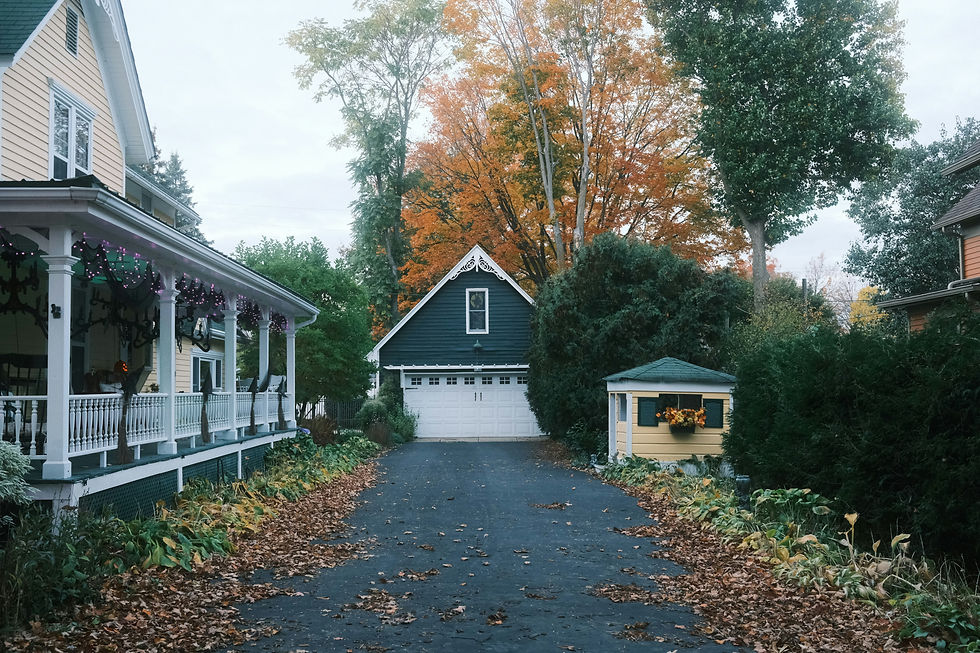
But an empty parking space has not stopped being an asset just because nobody is using it. For many businesses, churches, offices and other organizations, parking capacity changes dramatically throughout the day and week. Spaces that are essential at one time can be completely unused at another. That unused capacity represents something increasingly valuable: an opportunity to generate revenue from an asset the organization already owns or controls.
The Parking Problem Businesses Don't Usually See
Most businesses think about parking from the perspective of demand. Do we have enough spaces for our customers? Will employees have somewhere to park? Will people complain if the lot is full?
The less obvious question is what happens when demand disappears.
A restaurant may have a busy lunch service but plenty of available spaces in the morning. An office may have a full parking lot during the week but significantly lower demand on evenings and weekends. A church may need substantial parking on Sunday morning while having an almost completely empty lot for the rest of the week.
The property has not changed. The parking spaces have not changed. Only the demand has changed.
That creates an opportunity to think about parking differently.
Empty Parking Is Still Valuable Real Estate
Parking occupies valuable land. Businesses pay for that land through their property costs, leases, taxes, maintenance and other expenses. Yet the parking component of a property is often treated as though it has only one purpose: serving the property's own customers or occupants.
That makes sense when the spaces are needed. It makes less sense when they sit empty for large portions of the week.
The same principle applies to almost any underused asset. An empty conference room can be rented for a meeting. An unused storefront can host an event. A spare room can be rented to a guest. The underlying space has value because someone else may have a use for it.
Parking is no different.
Churches May Have One of the Biggest Opportunities
Consider a typical church parking lot. On Sunday morning, the parking spaces may be essential. During the rest of the week, many of those same spaces may sit empty.
From the church's perspective, that parking lot is still serving an important purpose. It needs to be there when the congregation arrives. But that does not mean every space needs to remain unused during the hours when there are no services or events.
Shared parking creates the possibility of making some of that capacity available at other times.
For a church, this can turn parking from a pure operating expense into a potential source of revenue. The money could potentially support building maintenance, community programs, charitable work or other priorities. More importantly, the organization can make better use of infrastructure it already has.
The same concept can apply to community organizations, schools and other institutions with parking that follows a predictable schedule.
The Office Parking Lot Has Changed Too
The traditional office parking model was designed around a relatively simple assumption: employees would come to work, park their cars and leave at the end of the day.
Hybrid work has complicated that model.
An office might still maintain the same physical parking capacity while having fewer employees on site on a particular day. Some spaces may be occupied Tuesday through Thursday but largely empty on Monday and Friday. Evening and weekend utilization can be even lower.
That does not necessarily mean the parking spaces have become less valuable. It means their value may be available at different times.
A company could potentially make some parking capacity available when it is not required by employees. The result is a more flexible use of the property and another potential source of revenue.
Small Businesses Can Play Too
You do not need a massive parking lot to benefit from shared parking.
A small business with several spaces may have predictable periods when those spaces are not needed. A professional office may have empty spaces after employees leave. A retail business may have excess parking overnight. A property owner with commercial tenants may have spaces that are allocated but not consistently used.
These individual spaces may not seem significant. Collectively, however, they represent a substantial amount of parking capacity that is already built into communities.
The opportunity is particularly interesting in areas where parking demand is high. A space that seems insignificant to a business owner can be extremely useful to someone who needs to park nearby.
Turning a Cost Centre Into an Opportunity
Parking is rarely free to operate. Lots require paving, maintenance, snow removal, lighting, security and other ongoing expenses. Even when a parking space is empty, the owner continues to carry the cost of having it.
Generating revenue from unused spaces does not eliminate those costs. But it can change the economics of the asset.
Instead of asking whether parking generates enough value to justify its existence, an organization can begin asking whether its existing parking can do more.
That is a subtle but important shift. The goal is not necessarily to increase the size of the parking lot. It is to increase the utilization of the parking that already exists.
The Same Space Can Serve More Than One Purpose
One of the most interesting things about shared parking is that a parking space does not have to belong to a single use all day.
A business might need a space at 10 a.m. but not at 7 p.m. A church might need its parking on Sunday but have little demand on Tuesday. An office may need spaces during the workday but not overnight.
Those spaces can potentially serve different drivers at different times.
This is the same basic idea behind many forms of shared infrastructure. Capacity does not have to be permanently assigned if demand changes throughout the day. A single resource can support multiple users when their needs do not overlap.
Parking is particularly well suited to this model because demand is often highly predictable.
A New Revenue Stream From What You Already Own
For organizations looking for additional revenue, parking is an unusual asset. There is no need to invent a new product or create an entirely new business. The physical infrastructure already exists.
The question is simply whether some of it is available.
Parker provides a way for parking owners to make available spaces visible to drivers who need them. Instead of leaving those spaces empty, owners can potentially turn unused parking into revenue while maintaining the ability to use the spaces when they actually need them.
For a business, that could mean additional income. For a church or community organization, it could mean money supporting its broader mission. For a property owner, it could mean extracting more value from an existing asset.
The exact opportunity will depend on location, demand, availability and the rules governing the property. But the underlying idea is remarkably simple.
Parking Powered by People
For years, the parking industry has largely been built around dedicated parking businesses. Garages, lots and municipal spaces provide parking, while privately owned spaces remain mostly invisible to the people who need them.
Parker takes a different approach.
Instead of asking where another parking garage can be built, it asks a different question: How can we make better use of the parking spaces that already exist?
That means connecting the supply of unused parking with the people who need it.
A church can share its lot. A business can share its unused spaces. An office can make excess capacity available. A homeowner can share a driveway.
Different properties. Different schedules. The same basic opportunity.
Your Parking Lot Could Be Doing More
The next time you walk past an empty parking lot, look at it differently. Those spaces represent land, infrastructure and capacity that someone has already paid to create.
If they are sitting empty for hours or days at a time, there may be another use for them.
The future of parking does not necessarily mean building more spaces. It may mean making better use of the spaces we already have.
For property owners, that could create a new source of revenue. For drivers, it could create more places to park. And for communities, it could mean making better use of infrastructure that already exists.
Your parking lot is an asset. Parker can help you put it to work.


Comments