
The Hidden Cost of Searching for Parking
Parking has a funny way of making people waste time without realizing how much time they are actually losing. You leave home with enough time to get where you are going, only to spend the next 15 minutes driving around looking for somewhere to leave the car. You pass a full garage, circle the block, check another street and eventually find a space several blocks away. By the time you walk to your destination, the simple act of parking has turned into part of the journey.
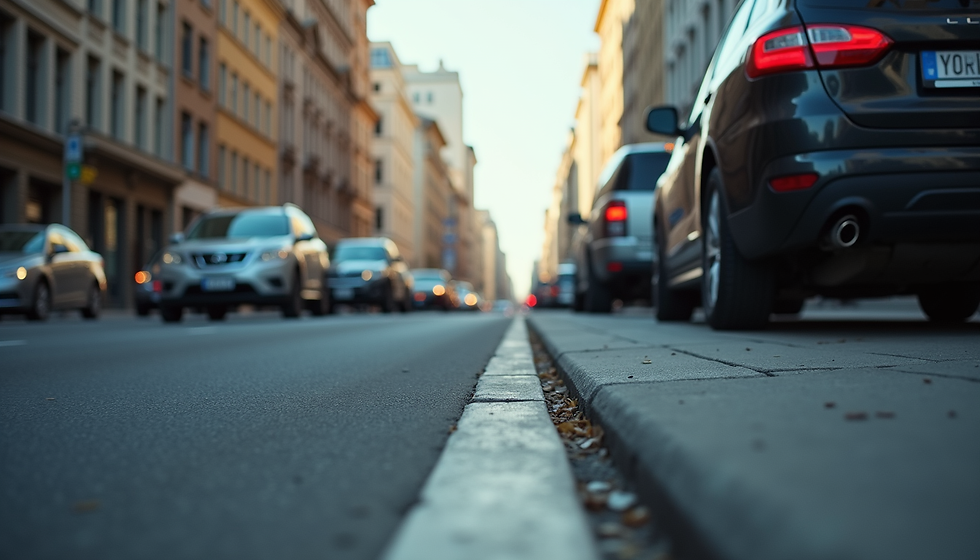
The cost is not just measured in minutes. Searching for parking means extra kilometres driven, more fuel or electricity used, more congestion on the road and, in some cases, the added risk of a parking ticket. Yet this has become such a normal part of driving that most people simply accept it. What if the problem is not that there are no parking spaces, but that we have not made enough of the spaces that already exist available to the people who need them?
Parking Starts Before You Reach Your Destination
When people talk about the cost of parking, they usually mean the price on the meter or the amount charged by a parking garage. Those numbers are easy to understand because they appear on a receipt.
The time spent looking for parking is different. There is no receipt for 20 minutes spent circling a neighbourhood. There is no line on your credit card statement for the extra kilometres driven while searching for an open space. Yet those costs are real.
If you are heading to a meeting, appointment or event, every minute spent looking for parking is a minute you cannot spend doing whatever brought you there in the first place. Multiply that experience across thousands of drivers and thousands of trips, and a small individual inconvenience becomes a much larger urban problem.
The Parking Space May Already Be There
Here is the strange part. A driver can struggle to find parking while an empty parking space sits nearby.
A homeowner may have an unused driveway while they are at work. A business may have spaces that are empty after closing. An office building may have unused capacity on days when fewer employees are in the building. A church may have a large parking lot that is mostly empty six days a week.
From the driver's perspective, those spaces may as well not exist. They are private, invisible and unavailable.
This is one of the fundamental problems Parker is designed to address. There is parking capacity in communities that drivers cannot easily discover or access, while those same drivers are spending time searching for parking elsewhere.
Why Do We Keep Driving Around?
Part of the problem is the way parking has traditionally been organized.
Public streets, municipal lots, commercial garages and private parking spaces operate as separate systems. Drivers may know about some of them, but there has historically been no simple way to see all of the available options around a destination.
That leaves drivers with a familiar routine: drive around and hope.
Technology has changed how we solve many other location-based problems. We can find restaurants, hotels, homes, rides and delivery services through our phones. We can see what is available, compare options and make decisions before arriving.
Parking is increasingly moving in the same direction.
The Cost of Circling the Block
Imagine two drivers heading to the same destination.
The first knows exactly where they are going to park. They arrive, leave the car and walk inside.
The second arrives without a parking plan. They drive past the destination, turn onto another street and search for an open space. Nothing is available. They circle again. Eventually, they find a space farther away and walk back.
The difference may only be 15 minutes.
But that 15 minutes is not the only difference. The second driver has also added additional driving to the trip. They have contributed to congestion and consumed energy. If they are running late, they may have to change their plans. If they choose an expensive garage because they cannot find anything else, they have also paid more.
None of this is particularly dramatic on its own. The problem is that it happens over and over again.
More Parking Is Not Always the Answer
When parking is difficult, the obvious solution seems to be building more parking.
But parking infrastructure is expensive and land is limited, particularly in dense urban areas. Building another garage or expanding a lot can take years and requires significant investment.
There is another way to approach the problem.
What if communities made better use of the parking that already exists?
A parking space does not need to be occupied constantly to be useful. A space that is available during the day can serve a driver during the day. A space that becomes available in the evening can serve someone going out for dinner. A business lot that is empty on weekends can potentially serve weekend visitors.
The physical space is already there. The challenge is connecting it with demand.
The Sharing Economy Solved a Similar Problem
The idea is not particularly new.
The sharing economy has repeatedly found ways to turn underused assets into useful resources. A spare bedroom can become accommodation. An unused vehicle can become part of a transportation service. A vacant property can become a short-term rental.
Parking follows the same basic principle.
The owner has something that is not being fully utilized. Another person has a need. A technology platform creates a connection between them.
The difference is that parking is everywhere. Almost every neighbourhood contains driveways, parking lots, commercial spaces and other forms of parking capacity. Much of it is simply unavailable to drivers because there has never been an easy way to connect the supply and demand.
What Parker Changes
Parker is built around making that connection.
Instead of limiting drivers to traditional parking options, Parker creates a marketplace where people and organizations with available parking can make their spaces available to drivers.
For the driver, that means another option when searching for somewhere to park.
For the parking owner, it means an opportunity to make money from a space that might otherwise sit empty.
That creates a different kind of parking network. It is not based entirely on building new infrastructure. It is based on using existing infrastructure more efficiently.
Your Empty Space Could Help Someone Else
One of the most interesting aspects of shared parking is how ordinary the supply can be.
It does not have to be a large commercial garage. It could be a single driveway.
It does not have to be a dedicated parking business. It could be a small office with a few unused spaces.
It does not have to be available every day. It could simply be available at certain times.
The value comes from matching availability with demand.
A space that means very little to its owner at 2 p.m. on a Tuesday could be extremely useful to someone who works nearby. A parking lot that is empty on Saturday could be exactly what a driver needs to attend an event. The same physical space can have very different value depending on who needs it and when.
A Better Parking Experience
The goal is not to eliminate every parking problem. No parking system can guarantee that every driver will always find a space exactly where they want one.
The opportunity is more practical than that.
Give drivers more choices.
Make existing parking easier to discover. Give property owners a way to make unused spaces available. Allow the same parking infrastructure to serve more people at different times.
That can make the parking system more flexible without requiring every new parking problem to be solved by building another parking facility.
Stop Looking for Parking. Start Finding It.
For years, finding parking has been treated as a frustrating but unavoidable part of driving. You leave extra time, circle the block and hope something opens up.
It does not have to work that way.
There are people with parking spaces they are not using. There are businesses with empty spaces. There are organizations with parking capacity that sits unused for much of the week. And there are drivers looking for somewhere to park right now.
Parker exists to connect those two sides.
Because the next parking space you need may not need to be built.
It may already exist. It just needs to be shared.


Comments