
Could Your Driveway Pay for Your Car?
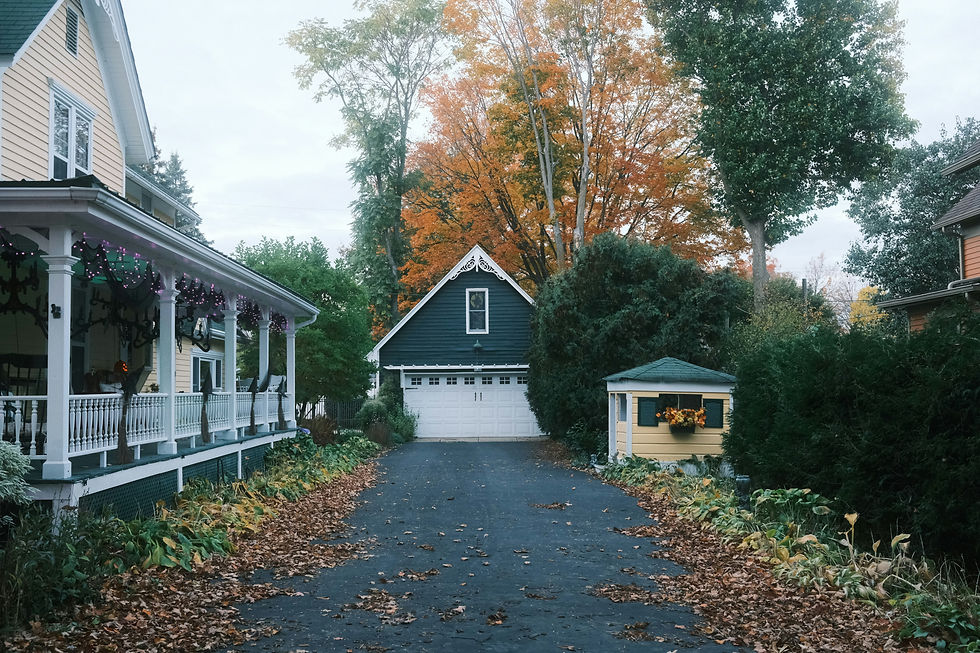
Most homeowners never think about their driveway as an asset that can generate income. It is simply part of the property, a place to park the car and perhaps an occasional spot for a visitor. Once the car is gone, the driveway usually becomes invisible. It sits there through the afternoon, evening or overnight, taking up valuable space without doing anything.

But a driveway does not stop being valuable when the owner is not using it. In a neighbourhood where parking is difficult, a private driveway can be exactly what another driver is looking for. Someone may work nearby, need to catch a train, have an appointment, visit a business or attend an event. The driver needs somewhere to park, while the homeowner has a space that is sitting empty.
That is the basic idea behind sharing parking. Your driveway is already there. Parker creates a way to potentially turn the time you are not using it into an opportunity to earn.
Your Driveway Has More Than One Use
We tend to think of property in very fixed terms. A bedroom is for sleeping. A garage is for storing things or parking a car. A driveway is for parking vehicles.
But the sharing economy has changed the way people think about underused space.
A spare bedroom can become accommodation. An unused room can become a workspace. A vacant property can become a rental. The underlying principle is that a physical asset does not have to remain dedicated to a single user all of the time.
Parking follows the same logic.
If you own two parking spaces but only need one, the second space does not have to sit empty. If you leave home every morning and return in the evening, your driveway may be available for much of the day. If you travel regularly, the space may be unused for even longer.
The question is not whether you own the space. The question is whether you are using it all the time.
The Person Who Needs Your Driveway May Be Closer Than You Think
Parking demand is local.
A driver does not necessarily need a parking space somewhere in the city. They need a space close to their destination. That could be a few blocks from their workplace, near a transit station, beside a hospital or close to a restaurant or event venue.
This creates an interesting opportunity for homeowners.
A driveway that seems ordinary to the person who lives there can be extremely useful to someone who works or visits nearby. The homeowner sees a piece of the property. The driver sees a solution to a problem.
The closer the driveway is to a place where people need to go, the more relevant that space can potentially become.
You Do Not Need to Become a Parking Business
One reason homeowners may never consider sharing their parking is that they assume it requires a lot of work.
It does not have to.
The concept is much simpler than operating a parking garage. You are not building a facility, hiring attendants or managing a large property. You are making an existing space available during the times you choose.
For some homeowners, that might mean every weekday. For others, it might mean evenings or weekends. Someone who travels frequently could potentially make a space available when they are away.
The flexibility is part of the appeal. The space remains yours, and you determine when it can be used.
How Much Could a Driveway Earn?
There is no universal answer because parking values are determined by the local market.
A driveway in a quiet neighbourhood with abundant parking may attract little demand. A space near a busy commercial district, transit station, hospital or event venue can be considerably more useful. Availability also matters. A space available every day can serve a different market from one available only occasionally.
That means homeowners should think less about a fixed dollar amount and more about the underlying factors that create parking value.
Where is the space?
When is it available?
How difficult is parking nearby?
Who might need it?
Those questions can tell you much more about the potential value of a driveway than its size alone.
The Hidden Economics of an Empty Space
There is an interesting economic difference between an asset that is unused and an asset that is unproductive.
If your driveway is empty, you are not necessarily losing money every minute that no one is parked there. But you are also not generating any value from that capacity.
The land is already part of your property. The driveway is already built. You are already paying for the property, including the space.
Sharing the driveway does not create the asset. It simply creates the possibility of using it differently.
That is what makes parking such an interesting part of the sharing economy. The opportunity is not based on creating something new. It is based on making better use of something that already exists.
Think About Your Week
A simple way to understand the opportunity is to think about your own parking habits.
When do you actually use your driveway?
Maybe your car leaves at 7:30 every morning and does not return until 6. Maybe you work from home and your car barely moves during the week. Maybe you have a second vehicle that is used only on weekends. Maybe you leave town regularly.
Now look at the hours when the space is empty.
Those hours may have value to someone else.
A commuter may need a place to park for the workday. A nearby resident may need an additional space. A visitor may need parking for an evening. An event attendee may need somewhere to leave a vehicle for several hours.
The same space can serve different needs at different times.
It Is Not Just About Homeowners
The driveway is an easy example because almost everyone understands it.
But the same concept applies to many other property owners.
A small business might have several parking spaces that are empty after closing. An office might have unused spaces on evenings or weekends. A church might have a large parking lot that is mostly empty outside services. A property owner might control parking that is only partially utilized.
In each case, the underlying question is the same.
Can the space be used by someone else when the primary owner or user does not need it?
If the answer is yes, there may be an opportunity.
What Parker Is Really Changing
Parker is not creating parking out of thin air.
The parking already exists.
What Parker is changing is the connection between the people who have parking and the people who need it.
That sounds like a small distinction, but it can have a significant effect on how parking works. Instead of thinking of parking as something provided only by garages, lots and municipalities, it becomes something that can also be supplied by ordinary people and organizations.
Your driveway can become part of that network.
So can a business parking lot.
So can a church.
So can an office.
Together, those spaces can create a much larger supply of parking without every new space requiring new construction.
Parking Powered by People
There is a broader idea behind all of this.
Cities are full of underused assets. A spare room. An empty office. An unused vehicle. A vacant parking space.
Technology has made it easier to connect those assets with people who need them.
Parker applies that same principle to parking.
The homeowner gets an opportunity to make money from an underused space. The driver gets another option when looking for somewhere to park. And the community gets more use from infrastructure that already exists.
It is a simple transaction built around an overlooked asset.
Look at Your Driveway Differently
The next time you pull your car out of your driveway, take a second look at the space you leave behind.
How long will it be empty?
Who else might need it?
What would that space be worth if someone could use it while you are not?
For years, most homeowners have never had a reason to ask those questions. A driveway was simply part of the house.
The sharing economy is changing that.
Your driveway may be more than somewhere to park your car. It may be an asset you can share, a resource someone else needs and a potential source of additional income.
Your car does not have to be parked there for your driveway to have value.
Parker helps put empty parking to work.


Comments